
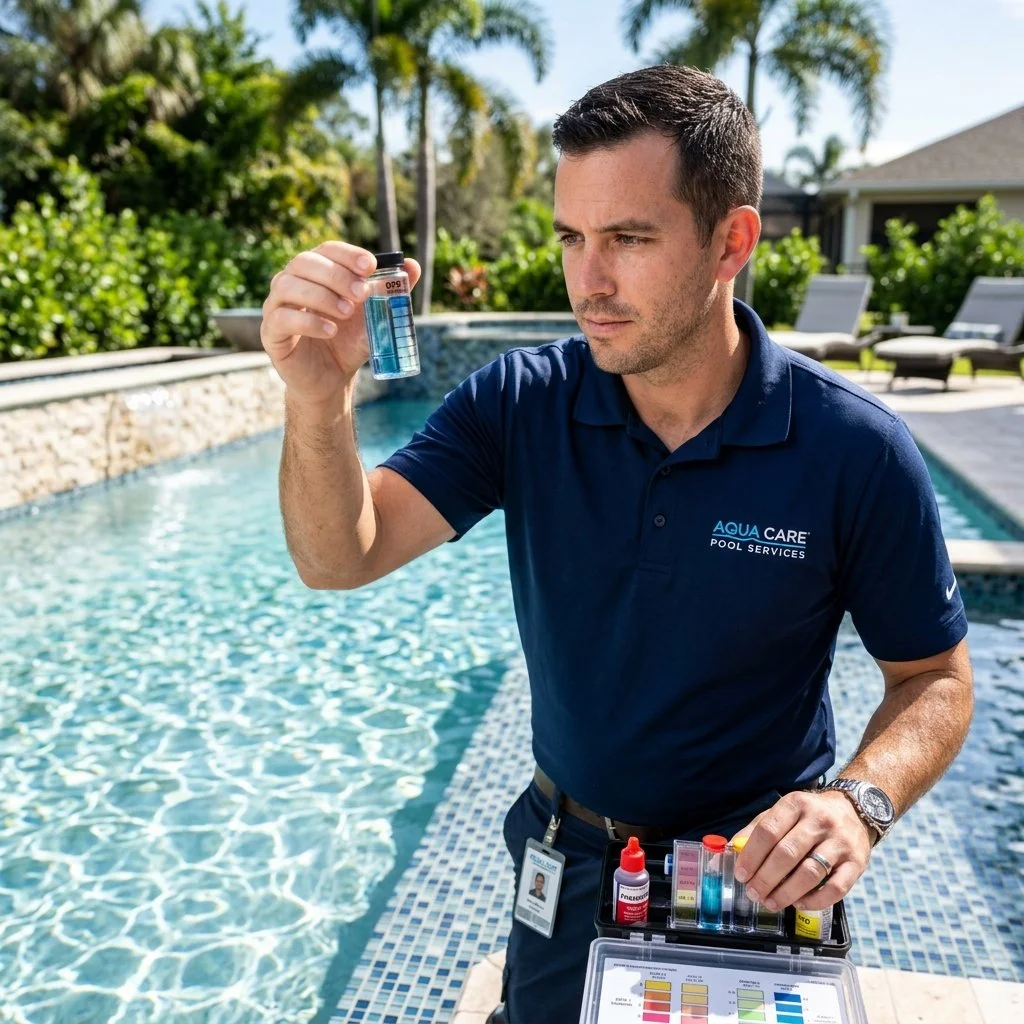
Pool Care Education
The DFW pool owner's care guide
Practical, honest answers to the questions we hear most — so you can understand your pool and protect your investment.
Pool Care Essentials
Know what your water and equipment are telling you
Clear, practical guidance grounded in North Texas conditions.
Signs your pool needs a professional
Cloudy or green water, persistent algae, rising filter pressure, a noisy pump, or eyes that sting after swimming are all signals it’s time to call in a technician.
Why regular pool maintenance matters
Skipping weeks lets algae, scale, and imbalance compound quickly in Texas heat. Consistent care protects your plaster, equipment, and swimmers — and prevents expensive surprises.
Pool equipment maintenance
Pumps, filters, salt cells, and heaters need regular inspection. Catching a suction leak or scaling issue early is far cheaper than replacing a failed heat exchanger.
The Orenda LSI index explained
The Langelier Saturation Index tells us whether water is corrosive or scale-forming. Keeping LSI balanced protects plaster and equipment — the foundation of our chemistry approach.
How often should you clean your pool?
In DFW, weekly cleaning and balancing is the sweet spot. High temperatures, pollen, and storms burn through chlorine and drop debris faster than most homeowners expect.
Pool water chemistry basics
Chlorine sanitizes, pH keeps water comfortable and non-corrosive, and alkalinity buffers pH swings. Balancing all three (and calcium via LSI) is what keeps water clear and safe.
Why regular pool maintenance matters in Texas
In the DFW climate, a pool can go from crystal clear to cloudy in just a few hot days. Sunlight burns off chlorine, pollen and debris feed algae, and sudden storms swing your water balance. Consistent weekly care keeps sanitizer levels stable, prevents algae from ever taking hold, and catches small equipment issues before they become expensive repairs. Skipping even a couple of weeks in summer can undo months of good maintenance.
Understanding pool water chemistry
Balanced water rests on a few key readings: chlorine (or salt-generated sanitizer) kills bacteria and algae; pH keeps water comfortable and non-corrosive; total alkalinity buffers pH so it doesn’t swing wildly; and calcium hardness — tracked through the Langelier Saturation Index (LSI) — determines whether water is corrosive or scale-forming. When LSI drifts negative, water aggressively pulls calcium out of your plaster; when it’s too positive, scale forms on tile and equipment. Our Orenda-based approach keeps all of these in harmony.
Signs your pool needs professional attention
Watch for cloudy or green-tinted water, algae on walls or steps, a strong chlorine smell (often a sign of the wrong chemistry, not too much chlorine), stinging eyes after swimming, rising filter pressure, or a pump that’s louder than usual. Any of these means it’s time to bring in a technician before the problem — and the cost — grows.
Keeping your equipment healthy
Your pump, filter, salt cell, and heater are a connected system. A suction-side air leak strains the pump; a clogged filter chokes flow and clouds water; unbalanced water scales up a heat exchanger and shortens heater life. Regular inspection and correct water chemistry are the two most powerful ways to extend the life of every component on your equipment pad.
Ready When You Are
Ready for a cleaner, healthier pool?
Get a free, no-obligation quote today. No contracts — just crystal-clear water and honest, professional care.